

Greetings, fellow tea enthusiasts! Today, I would like to shed some light on a topic that is often overlooked but ever so important – sustainable tea practices. As a connoisseur of this delightful beverage, you have the power to make a difference in the environmental impact of tea production. So, let’s embark on a journey together, exploring the world of sustainable sipping.
Firstly, it is crucial to understand why sustainability matters when it comes to tea. The environmental consequences of conventional tea production are staggering. Pesticides, deforestation, and excessive water consumption are just a few of the dangerous details that plague the tea industry. By choosing eco-friendly alternatives, not only will you be making a positive impact on the planet, but you will also enjoy a healthier, chemical-free cuppa.
So, what do you need to know about sustainable tea? Luckily, I’ve got you covered! Head over to What You Need To Know About Sustainable Tea (& a list of … for an in-depth guide on the topic. From organic and fair trade certifications to the importance of supporting small, independent tea farms, this comprehensive resource will equip you with all the knowledge you need to make informed choices and ensure your sipping practices are truly sustainable.
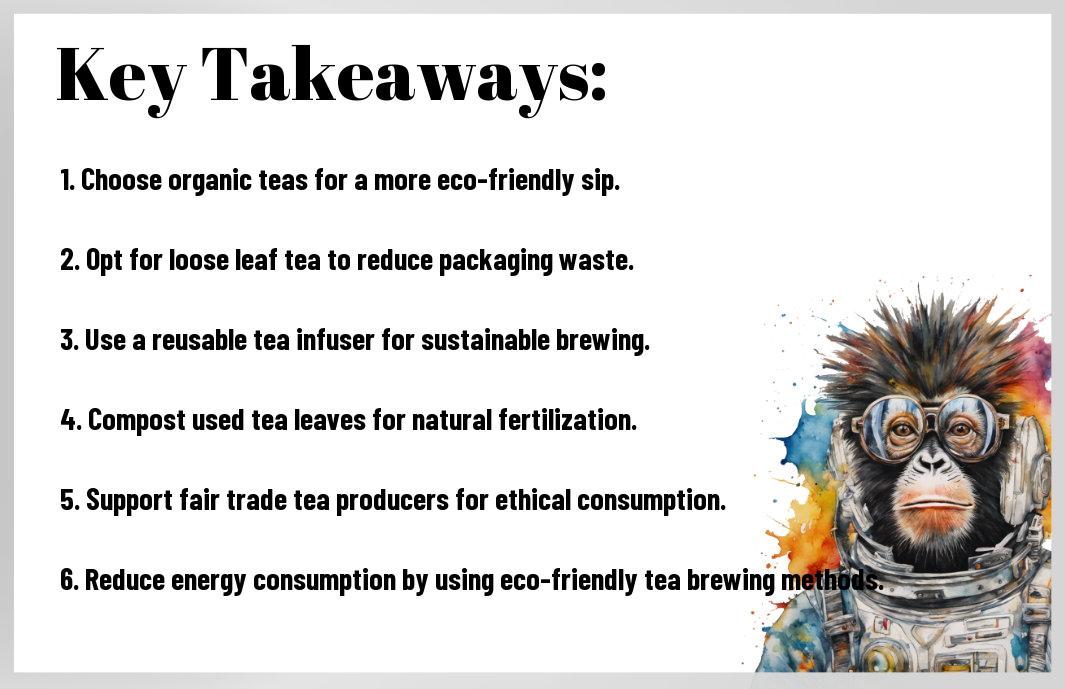
Key Takeaways:
- Using loose leaf tea: Opt for loose leaf tea instead of tea bags to reduce waste and minimize the carbon footprint.
- Composting tea waste: Dispose of used tea leaves by composting them, contributing to a circular economy and reducing landfill waste.
- Choosing organic and fair trade teas: Support sustainable farming practices and fair wages by selecting organic and fair trade tea options.
- Using reusable tea infusers: Eliminate the need for single-use tea bags by using reusable tea infusers or tea balls made from stainless steel or silicon.
- Conserving water: Practice mindful tea brewing by heating only the required amount of water and avoiding excessive water consumption.
- Opting for sustainable packaging: Look for tea brands that use eco-friendly packaging materials such as biodegradable tea bags or recyclable tins.
- Supporting ethical tea companies: Research and choose tea companies that prioritize sustainable sourcing, fair wages, and ethical labor practices.
The Concept of Eco-Friendly Tea Practices
Assuming you are someone who is passionate about tea and its environmental impact, understanding the concept of eco-friendly tea practices is essential. In this chapter, I will delve into the principles and benefits of eco-friendly tea cultivation, as well as the journey from traditional to green tea farming.
Principles and Benefits of Eco-Friendly Tea Cultivation
When it comes to eco-friendly tea cultivation, there are several key principles that guide sustainable practices. These principles focus on minimizing harmful effects on the environment while promoting conservation and sustainable livelihoods for tea farmers.
One of the fundamental principles is organic farming, which involves avoiding synthetic pesticides, herbicides, and chemical fertilizers. Instead, natural methods are utilized to combat pests and diseases, preserving the biodiversity of the ecosystem. By choosing organic teas, you can ensure that the tea leaves have not been exposed to harmful chemicals, resulting in a healthier and safer cup of tea.
Another important principle is water conservation. Tea cultivation typically requires significant amounts of water, and eco-friendly practices focus on optimizing water usage. This includes implementing efficient irrigation systems that reduce water wastage and replenishing water sources responsibly.
Furthermore, eco-friendly tea cultivation emphasizes fair labor practices. By supporting tea companies that prioritize the fair treatment of workers, you contribute to social sustainability. This means tea farmers and workers are paid fair wages, provided with safe working conditions, and given opportunities for education and skill development.
The benefits of embracing eco-friendly tea cultivation are numerous. Firstly, it safeguards the health of the environment, preserving the delicate balance of ecosystems and protecting biodiversity. By choosing sustainably grown teas, you actively contribute to conservation efforts and support the habitats of various plant and animal species.
Moreover, eco-friendly practices ensure the health and well-being of tea farmers and workers. By avoiding the use of harmful chemicals, they are protected from potential health hazards. Additionally, fair labor practices promote social sustainability, empowering tea communities and improving their quality of life.
Lastly, by consuming eco-friendly teas, you enjoy a cleaner and more flavorful cup. The absence of chemical residues enhances the taste and aroma of the tea while providing peace of mind knowing that you are sipping a truly natural and wholesome beverage.
The Journey from Traditional to Green Tea Farming
The transition from traditional to green tea farming has been a significant milestone in the pursuit of sustainable tea production. Traditional tea farming practices often relied heavily on chemicals, resulting in adverse effects on the environment and human health.
Green tea farming, on the other hand, signifies a shift towards more environmentally responsible practices. The use of organic cultivation methods, mentioned earlier, is a key aspect of green tea farming. This approach ensures that the tea plants are free from synthetic chemicals throughout their growth.
In addition to eliminating harmful chemicals, green tea farming also focuses on enhancing biodiversity on tea estates. This includes preserving existing flora and fauna, planting shade trees, and creating habitats for beneficial insects and birds. The aim is to develop a sustainable ecosystem that supports the tea plants and improves overall ecological balance.
Another important aspect of the journey to green tea farming is the adoption of renewable energy sources. Sustainable tea farms increasingly rely on solar and wind energy to power their operations, reducing dependence on non-renewable resources and mitigating carbon emissions.
Overall, the journey from traditional to green tea farming signifies a commitment to sustainable practices and a more holistic approach to tea cultivation. It exemplifies the continuous effort to minimize the negative environmental impact associated with tea production, while maximizing the positive contributions towards a more sustainable future.
Sustainable Processing of Tea
Your journey towards sustainable sipping doesn’t end with choosing eco-friendly teas. It is equally important to consider the methods used for processing the tea leaves. By ensuring sustainable practices in tea processing, we can further reduce the environmental impact and promote a healthier planet. In this chapter, I will delve into the eco-friendly tea harvesting and processing techniques, as well as the impact of sustainable processing on tea quality.
Eco-Friendly Tea Harvesting and Processing Techniques
Choosing teas that are cultivated using eco-friendly harvesting and manufacturing techniques is a crucial step in supporting sustainability. Let me shed light on a few key techniques that make a significant difference in reducing environmental harm while maintaining the integrity of the tea leaves.
Organic farming: One of the most important aspects of eco-friendly tea cultivation is opting for organic farming methods. This means that the tea is grown without the use of synthetic pesticides, herbicides, or chemical fertilizers. Instead, natural compost and pest management techniques are employed to maintain plant health. By choosing organically grown teas, you not only support sustainable agriculture but also consume a beverage free from harmful residues.
Biodynamic practices: Another eco-friendly tea cultivation method gaining popularity is biodynamic farming. This holistic approach considers the tea plantation as a self-sustaining ecosystem. Biodynamic farmers prioritize the use of natural fertilizers, enhance biodiversity, and adhere to lunar cycles for optimal growth. By embracing this technique, tea producers not only nurture the environment but also enhance the flavor and quality of the tea itself.
Fair trade certifications: When selecting teas, look out for products bearing fair trade certifications. Fair trade ensures that tea farmers are paid fair wages and work under safe conditions. By supporting fair trade, you contribute to the well-being of farmers and their communities while fostering sustainable farming practices.
The Impact of Sustainable Processing on Tea Quality
Now, you might wonder if sustainable processing is detrimental to the quality of your tea. Rest assured, sustainable practices can actually enhance the taste, aroma, and overall experience of your brew. Here’s how:
Careful handling of tea leaves: Tea manufacturers focusing on sustainability pay great attention to the careful handling of leaves throughout the processing. This includes minimizing mechanical damage through hand-picking, gentle processing methods, and creating ideal conditions for oxidation and drying. By treating the leaves with utmost care, the inherent flavors and aroma of the tea are better preserved, resulting in a more luxurious sipping experience.
Quality-focused oxidation and withering: Sustainable tea processing revolves around maintaining the right balance between oxidation and withering, crucial steps in tea production. This careful regulation ensures that teas develop their desired flavors and aromas while avoiding over-processing or excessive energy usage. By finding this sweet spot, sustainable tea manufacturers prioritize taste without compromising on their eco-friendly commitments.
Energy-efficient manufacturing: Sustainable tea processing involves adopting energy-efficient manufacturing techniques. This includes utilizing renewable energy sources, optimizing machinery operation, and implementing efficient waste management systems. By reducing energy consumption and minimizing waste generation, tea producers promote sustainability while conserving resources for future generations.
Now that you are aware of the eco-friendly harvesting and processing techniques, as well as their positive impact on tea quality, you can make more informed choices in your pursuit of sustainable sipping. Stay tuned for the next chapter where I will explore the importance of packaging and transportation in eco-friendly tea practices.
Packaging and Distribution in Sustainable Tea Industry
Now that we have explored the eco-friendly practices within tea cultivation, let’s shift our focus to the packaging and distribution aspects of the sustainable tea industry. These often overlooked areas play a crucial role in minimizing the carbon footprint of our beloved beverage.
Eco-friendly Packaging Solutions for Tea
When it comes to sustainable tea packaging, the industry has made remarkable progress in recent years. I am pleased to discover that many tea companies are now adopting innovative packaging solutions that prioritize both functionality and environmental consciousness.
One of the most popular trends in eco-friendly tea packaging is the shift towards biodegradable materials. Companies have started using compostable tea bags, made from natural fibers like plant starch or corn silk. These bags not only break down harmlessly in the soil but also reduce the amount of waste that ends up in landfills. Furthermore, some companies have introduced tea sachets made from unbleached and chlorine-free paper, eliminating the harmful chemicals traditionally used in the bleaching process.
Another exciting development in the packaging industry is the use of recyclable materials. Many tea brands have switched to packaging made from post-consumer recycled materials, such as recycled cardboard or paper. This reduces the demand for virgin materials and reduces the energy required for production, ultimately contributing to the conservation of our precious natural resources.
Furthermore, certain tea companies have taken a step further by employing sustainable and biodegradable packaging alternatives. For example, bamboo or metal canisters are gaining popularity as they offer a durable, reusable option for storing tea leaves. By choosing these alternatives, you not only reduce waste but also add a stylish touch to your tea collection.
Green Logistics in Tea Distribution
In addition to packaging, the distribution aspect of the sustainable tea industry also warrants attention. It’s crucial to consider the environmental impact of transporting tea from the point of origin to your cup. Fortunately, many tea companies are making significant efforts to embrace green logistics and reduce their carbon footprint.
One notable practice in green logistics is the adoption of carbon-neutral shipping methods. In an effort to offset the emissions generated during transportation, tea companies are investing in carbon offset programs. By supporting projects like reforestation or renewable energy initiatives, these companies ensure that their transportation activities have a neutral or even positive impact on the environment.
Moreover, efficient supply chain management plays a pivotal role in reducing the environmental impact of tea distribution. By optimizing routes and consolidating shipments, companies can minimize fuel consumption and emissions. Additionally, some tea brands are exploring alternative transportation methods, such as utilizing electric vehicles or integrating rail transportation whenever possible.
It is worth noting that the sustainable tea industry is not only focused on reducing carbon emissions but also on preserving the quality of tea during transportation. Some tea companies have invested in high-quality packaging materials that offer better protection against moisture and light, ensuring that the tea arrives at your doorstep in optimal condition.
Overall, the packaging and distribution segments of the tea industry have witnessed remarkable advancements in sustainability. From eco-friendly packaging materials to carbon-neutral shipping practices, there are numerous ways in which tea companies are prioritizing the environment without compromising on functionality. As a conscious consumer, it is vital to support these initiatives by choosing tea brands that align with your values and contribute to a greener future.
Case Studies on Eco-Friendly Tea Practices
Lastly, let’s delve into some real-life examples of eco-friendly tea practices that have made a significant impact. These case studies serve as inspiration and demonstrate how sustainability can be incorporated into various aspects of the tea industry.
- 1. Organic Tea Farming: In a study conducted by the International Journal of Environmental Science and Technology, it was found that organic tea farming methods reduced pesticide use by 75% compared to conventional farming. This practice not only minimizes chemical pollution but also ensures the consumption of healthier tea leaves for you to savor.
- 2. Fair Trade Certification: Fair Trade certification promotes social and environmental sustainability in tea production. For example, tea companies like Tazo and Numi have partnered with fair trade organizations to ensure fair wages, safe working conditions, and community development for tea workers. By supporting fair trade, you can contribute to the overall well-being of tea-producing communities.
- 3. Renewable Energy Integration: Tea estates in Darjeeling, India, have introduced solar panels to meet their energy needs. This reduces reliance on fossil fuels and decreases the carbon footprint of tea production. Solar-powered tea factories are now becoming more prevalent, helping the industry transition to a greener and cleaner future.
- 4. Composting Tea Waste: Some tea companies, such as Teapigs, have implemented composting programs to manage tea waste effectively. By offering compostable packaging and establishing collection systems, the tea industry can reduce the amount of waste sent to landfills. This initiative also encourages consumers to dispose of tea bags in an environmentally-friendly manner.
Successful Models of Sustainable Tea Production
Within the realm of sustainable tea production, certain models have proven highly successful in promoting environmental stewardship and ethical practices. These models serve as beacons of inspiration for the entire industry.
One successful model that has gained recognition in recent years is the concept of regenerative agriculture. Regenerative tea farming focuses on restoring the health and fertility of the land through sustainable farming techniques such as crop rotation, cover cropping, and soil conservation. This approach not only enhances biodiversity but also improves the overall soil health, resulting in better tea quality.
Another notable model is the small-scale, community-based tea farming approach. By empowering local farmers and facilitating their access to resources, knowledge, and fair markets, this model fosters sustainable practices that benefit both the environment and communities. Examples include programs implemented by organizations like Ethical Tea Partnership and Rainforest Alliance, which provide support and training to tea farmers worldwide.
Examples of Green Packaging and Logistics in Tea Industry
Efforts to make the packaging and logistics aspect of the tea industry more sustainable have gained significant traction in recent years. By adopting eco-friendly practices, tea companies can minimize their environmental impact throughout the supply chain.
One prominent example is the use of biodegradable or compostable packaging materials. Brands like Pukka Herbs and Clipper Teas have transitioned from traditional plastic tea packaging to biodegradable alternatives made from plant-based materials. These initiatives significantly reduce plastic waste and promote a circular economy by ensuring packaging can be reabsorbed back into the environment.
Another noteworthy approach is the implementation of efficient transportation and logistics strategies. By optimizing routes, utilizing eco-friendly vehicles, and consolidating shipments, tea companies can reduce their carbon emissions and ecological footprint. Implementing such practices not only benefits the environment but also contributes to cost savings and operational efficiency.
It is heartening to witness the tea industry embracing sustainable practices at various levels. From tea farming to packaging and logistics, these examples demonstrate the positive impact we can collectively achieve by prioritizing eco-friendly practices. Let us continue to support and advocate for these sustainable models, ensuring that our tea-drinking pleasures do not come at the expense of the planet.
Challenges and Opportunities in Promoting Sustainable Tea
Despite the growing awareness and demand for sustainable practices in the tea industry, there are several challenges that hinder the widespread implementation of eco-friendly tea practices. However, these challenges also present opportunities for innovation and improvement. In this chapter, I will discuss some of the hurdles in implementing sustainable tea practices as well as the future prospects and opportunities that lie ahead.
The Hurdles in Implementing Sustainable Tea Practices
One of the major obstacles in promoting sustainable tea is the lack of awareness among consumers. Many tea drinkers simply do not realize the environmental and social impact that their beverage choices can have. It is crucial to educate individuals about the importance of sustainable tea production and consumption, highlighting the positive effects it can have on the environment and communities.
Another challenge is the complexity of the global tea supply chain. Tea is often grown in remote areas and passes through multiple intermediaries before reaching the consumer. This makes it difficult to trace the origin and production methods of tea, which in turn makes it challenging to ensure sustainable practices throughout the supply chain. Transparent certification systems and labels can help address this issue by providing consumers with information about the tea’s sustainability credentials.
Additionally, the small-scale nature of many tea farms poses a challenge in implementing sustainable practices. Smallholder tea farmers often lack the resources, knowledge, and infrastructure to adopt eco-friendly techniques. They may face financial constraints in investing in sustainable technologies or struggle with limited access to training and information. Supporting these farmers through capacity-building programs, financial incentives, and collaborations can help overcome this hurdle.
The Future Prospects and Opportunities
Despite the challenges, there are numerous future prospects and opportunities for promoting sustainable tea. Growing consumer demand for eco-friendly products presents a positive outlook for the tea industry. By offering sustainable options and transparent information, tea companies can cater to this demand and attract environmentally conscious consumers.
Technological advancements also offer great potential in improving the sustainability of tea production. Innovations such as precision agriculture, alternative energy sources, and waste management systems can significantly reduce the environmental footprint of tea cultivation and processing. Embracing these technologies and investing in research and development can lead to more sustainable and efficient tea practices.
Furthermore, collaboration and partnerships play a crucial role in promoting sustainability in the tea sector. Stakeholders including tea producers, retailers, governments, and non-governmental organizations need to work together to develop and implement comprehensive sustainability strategies. This includes sharing best practices, supporting research initiatives, and establishing platforms for dialogue and knowledge exchange. Collaborative efforts can amplify the impact of individual actions and drive meaningful change in the industry.
In conclusion, while there are challenges to overcome, the opportunities for promoting sustainable tea practices are immense. By raising awareness, improving transparency, supporting smallholder farmers, and embracing technological advancements, we can shape a more sustainable future for the tea industry. Together, we have the power to make a positive impact on the environment, tea-growing communities, and our own well-being.
Consumer Perspective and Contribution towards Sustainable Tea
Awareness and Perception of Consumers on Sustainable Tea
After having explored the importance of sustainable tea practices, it is crucial to dive into the consumer perspective and their contribution towards this cause. As a consumer myself, I have witnessed a growing awareness and perception surrounding sustainable tea in recent years. People are increasingly concerned about the impact their choices have on the environment and are actively seeking ways to make more sustainable choices.
It is encouraging to see that consumers are now more conscious of the environmental and social aspects related to their cup of tea. Many are educating themselves about sustainable tea production methods and the associated certifications, such as Fairtrade and Organic. By doing so, consumers can make informed choices and support tea producers who prioritize eco-friendly practices.
Furthermore, it is important to note that consumers’ perception of sustainable tea extends beyond the product itself. They consider various factors, including the packaging, transportation, and waste management associated with their tea consumption. As a result, there is an increasing demand for teas that are packaged in eco-friendly materials, such as biodegradable or compostable packaging. This shift in consumer preferences encourages tea companies to adopt more sustainable packaging practices.
Overall, the awareness and perception of consumers on sustainable tea have significantly evolved. People are now not only interested in the taste and quality of their tea but also the environmental and social impact of their choices. This shift in consumer mindset plays a pivotal role in promoting eco-friendly tea practices and encourages tea producers to prioritize sustainability throughout their supply chains.
The Role of Consumers in promoting Eco-Friendly Tea
As an individual tea consumer, I have come to realize the significant role I play in promoting eco-friendly tea practices. The choices I make directly influence the demand for sustainable tea and the actions of tea producers. By opting for sustainably sourced teas and supporting tea companies that prioritize environmental and social responsibility, I actively contribute to a more sustainable tea industry.
One of the most impactful ways consumers can promote eco-friendly tea is by supporting certifications and labels that ensure sustainable practices. Certifications such as Rainforest Alliance, Fairtrade, and Organic guarantee that the tea has been produced and processed in an environmentally and socially responsible manner. By actively seeking out these certifications and choosing certified teas, consumers send a message to the tea industry that sustainability matters.
In addition to choosing certified teas, consumers can also consider the overall lifecycle of their tea consumption. This includes reducing waste by using loose leaf tea, opting for reusable tea bags or strainers, and composting tea leaves after use. Small changes like these can collectively make a significant impact on reducing the environmental footprint of tea consumption.
Another way consumers can contribute is by actively engaging with tea companies and advocating for sustainability. By voicing concerns and preferences for eco-friendly practices, consumers can influence tea producers to adopt more sustainable methods. This can be done through social media, customer feedback, or by supporting brands that align with their sustainability values.
By taking these actions as a consumer, I can directly contribute to the growth of the sustainable tea movement. Each choice I make sends a powerful message to tea producers and helps reshape the tea industry towards a more environmentally and socially responsible future.
Policies and Regulations supporting Sustainable Tea Practices
Lasty, I would like to address the crucial role that policies and regulations play in supporting sustainable tea practices. Governments and regulatory bodies around the world have recognized the need for environmental protection and have implemented measures to ensure sustainable practices in the tea industry. These policies not only aim to preserve natural resources but also create a level playing field for tea producers, encouraging them to adopt eco-friendly methods.
The Role of Government and Regulatory Bodies
The role of government and regulatory bodies cannot be underestimated when it comes to promoting sustainable tea practices. They act as guardians, monitoring and enforcing compliance with environmentally friendly guidelines. Through their regulations, they ensure that tea producers follow responsible farming methods, waste management practices, and adhere to sustainable sourcing policies.
Government bodies also play a significant role in promoting sustainable certifications for tea producers. For instance, they may support and encourage the adoption of certifications like Fair Trade, Rainforest Alliance, or Organic. These certifications not only assure consumers of sustainable production methods but also help tea companies differentiate themselves in the market by meeting higher environmental standards.
Moreover, governments and regulatory bodies often provide financial incentives, grants, and subsidies to tea producers who implement sustainable practices. These incentives serve as a motivation for tea companies to invest in sustainable infrastructure, such as energy-efficient machinery, waste treatment systems, or renewable energy sources. By providing financial support, governments encourage and facilitate the transition to sustainable tea practices.
Impact of Policy Changes on Tea Industry Sustainability
Policy changes can have a profound impact on the sustainability of the tea industry. When governments prioritize and enforce sustainable practices, it creates a ripple effect throughout the entire supply chain. Tea producers are compelled to adopt more environmentally friendly methods, reducing their carbon footprint and conserving natural resources.
One of the key impacts of policy changes is the reduction in harmful chemical usage in tea production. Governments may limit or ban the use of pesticides and herbicides that are harmful to the environment and human health. By doing so, they protect ecosystems and ensure the safety of tea workers and consumers.
Additionally, policy changes can address deforestation and biodiversity conservation in tea-growing regions. Governments may impose regulations to protect forest areas, wildlife habitats, and native plant species. This helps maintain ecological balance and safeguards the long-term sustainability of tea cultivation.
Furthermore, policies that promote sustainable sourcing and fair trade not only benefit the environment but also the livelihoods of tea workers. Governments can incentivize tea companies to pay fair wages, provide safe working conditions, and support local communities. By investing in social sustainability, policies create a more equitable and responsible tea industry.
To conclude, policies and regulations have a vital role in supporting sustainable tea practices. Through their influence on tea producers, they drive positive change, protect the environment, and enhance the well-being of tea workers and communities. It is crucial for governments and regulatory bodies to continue prioritizing sustainable policies to ensure a thriving and eco-friendly tea industry.
Turning Points in Eco-Friendly Tea Industry
After decades of conventional tea practices that often imposed negative impacts on the environment, the tea industry has experienced significant turning points towards sustainability. In this chapter, I will explore two major factors that have played a pivotal role in shaping the eco-friendly tea industry: technological innovations and the impact of climate change on sustainable tea production.
Technological Innovations and Their Role
Over the years, technological advancements have revolutionized the way tea is grown, harvested, and processed, leading to a more sustainable tea industry. These innovations have not only improved the efficiency of tea production but also minimized its environmental footprint.
One key technological breakthrough is the adoption of precision agriculture techniques. By utilizing modern tools such as drones, remote sensing, and geographic information systems (GIS), tea farmers can now gather precise data on soil conditions, moisture levels, and plant health. This enables them to optimize resource allocation, reduce the use of synthetic fertilizers and chemicals, and minimize water consumption. As a result, tea cultivation becomes more environmentally friendly, ensuring the long-term health of both the ecosystem and the tea bushes themselves.
Moreover, technological advancements have also facilitated the development of alternative pest control methods in tea production. Integrated pest management (IPM) techniques have gained popularity, which involves a combination of biological control, cultural practices, and targeted pesticide application. With a more focused approach, tea farmers can significantly reduce the use of agrochemicals while successfully combating pests and diseases that pose threats to tea crops.
Impact of Climate Change on Sustainable Tea Production
Climate change presents one of the most pressing challenges for the tea industry’s sustainability. Rising global temperatures, changing rainfall patterns, and extreme weather events pose significant threats to tea cultivation, giving rise to the urgent need for adaptation and mitigation strategies.
One of the major impacts of climate change on tea production is the alteration of traditional growing regions. As temperatures increase, some tea-growing areas are becoming unsuitable for cultivating high-quality tea due to changes in flavor profiles and diminished yields. Consequently, farmers are being forced to explore new regions for tea cultivation, altering the traditional tea landscape.
Extreme weather events such as droughts, floods, and storms also take a toll on tea production. Unpredictable rainfall patterns disrupt the growth and development of tea plants, leading to yield losses and reduced tea quality. Additionally, the increased frequency of pests and diseases in warmer and more humid conditions poses a significant threat to tea crops, requiring additional resources for pest management.
However, it is not all doom and gloom. The tea industry has recognized these challenges and is taking measures to adapt and mitigate the impact of climate change. Through the implementation of climate-smart agricultural practices, such as improved irrigation systems, efficient water usage, and shaded cultivation, tea farmers can minimize the negative consequences of climate change on their crops. Furthermore, research on breeding climate-resilient tea varieties is underway, providing hope for the future.
In conclusion, technological innovations and the impact of climate change are two pivotal factors that have shaped the eco-friendly tea industry. Through the utilization of modern techniques, tea production has become more sustainable, while climate change has posed significant challenges that require proactive measures. By embracing technological advancements and implementing climate-smart practices, the tea industry can ensure a sustainable future for both the environment and the tea lovers like you and me.
Conclusion
From above, we have explored the importance of adopting sustainable sipping practices in the realm of tea consumption. I believe that as individuals, we have the power to make a significant positive impact on the environment by implementing simple yet effective changes in our tea-drinking habits.
By opting for loose-leaf teas, you can not only enjoy a superior quality beverage but also significantly reduce the amount of packaging waste generated. Choosing organic and fair-trade teas ensures that you are supporting environmentally friendly and socially responsible practices in the tea industry. Additionally, making the switch to reusable tea infusers or steeping methods can eliminate the need for single-use tea bags, which often contain harmful chemicals.
Being mindful of your water usage while brewing tea, as well as properly disposing of used tea leaves in compost, further contributes to a sustainable tea-drinking experience. By implementing these eco-friendly practices, you can contribute to the preservation of our planet’s resources, support ethical tea production, and enjoy your tea in an environment-friendly way. Remember, every small step makes a difference, and together, we can create a greener future, one sip at a time.
FAQ
Q: What is Sustainable Sipping?
A: Sustainable Sipping refers to adopting eco-friendly tea practices that aim to minimize the negative environmental impact associated with tea production and consumption.
Q: Why is Sustainable Sipping important?
A: Sustainable Sipping is important because traditional tea production can have significant ecological consequences, including deforestation, water pollution, and excessive energy consumption. By embracing eco-friendly tea practices, we can help protect biodiversity, conserve resources, and promote a healthier planet.
Q: How can I practice Sustainable Sipping?
A: You can practice Sustainable Sipping by following these steps:
1. Choose organic, fair-trade teas to support environmentally-friendly farming practices and fair wages for tea workers.
2. Opt for loose-leaf teas instead of tea bags, which often contain plastic or contribute to unnecessary waste.
3. Use a reusable tea infuser or tea strainer instead of disposable tea filters.
4. Boil only the amount of water you need to avoid wasting energy.
5. Dispose of tea leaves in a compost bin or use them as fertilizer for plants.
Q: What are the benefits of using loose-leaf teas?
A: Using loose-leaf teas has several benefits:
1. Higher quality: Loose-leaf teas are often made from whole tea leaves and provide a more flavorful and aromatic experience compared to tea bags which contain broken or fannings.
2. Less waste: By using loose-leaf teas with a reusable infuser, you avoid the excess packaging and waste associated with individually packaged tea bags.
3. Cost-effective: While loose-leaf teas can have a higher upfront cost, they can be steeped multiple times, making them more cost-effective in the long run.
Q: How can I ensure the tea I’m consuming is sustainable?
A: To ensure the tea you are consuming is sustainable, look for certifications such as Fairtrade, Rainforest Alliance, or organic certifications. These labels indicate that the tea has been produced using eco-friendly practices, fair trade principles, or without the use of chemical pesticides and fertilizers.
Q: Are there any sustainable alternatives to traditional teabags?
A: Yes, there are sustainable alternatives to traditional teabags. Some options include:
1. Biodegradable tea bags made from natural materials such as cornstarch, hemp, or cotton.
2. Reusable tea infusers made of stainless steel or silicone that can be filled with loose-leaf tea.
3. Muslin cloth bags or cheesecloth that can be filled with tea leaves and steeped in hot water.
These alternatives help reduce waste and minimize environmental impact.
Q: Can I recycle used tea leaves?
A: Absolutely! Used tea leaves can be recycled in several ways:
1. Composting: Add tea leaves to your compost bin or pile. They provide organic matter and nutrients that enrich the soil.
2. Fertilizing: Sprinkle used tea leaves directly around plants as a natural fertilizer. They release beneficial nutrients as they decompose.
3. Pest deterrent: Use tea leaves to deter pests like slugs or snails. Scatter them around vulnerable plants as a natural deterrent.
Recycling tea leaves gives them a second life and contributes to a more sustainable gardening approach.